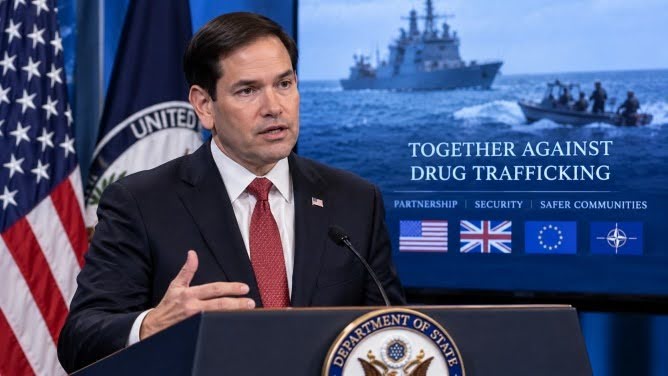
In a recent trip to Ecuador, US Secretary of State Marco Rubio announced plans to enhance collaboration with Latin American countries in the fight against drug trafficking. The United States aims to establish joint operations with nations such as Ecuador and Colombia, especially focusing on actions within their territorial waters and adhering to local laws. Rubio’s remarks underscore a strategic pivot toward partnering more closely with regional allies to tackle this ongoing issue.
This development comes as the US military continues its campaign against maritime vessels suspected of drug trafficking activities. A recent military strike in the Caribbean Sea resulted in three fatalities, adding to a reported total of at least 230 deaths from 69 operations since the campaign’s inception in September 2025. Rubio highlighted that future interventions would be evaluated individually, considering the specific threat and the vessel’s location, while also stressing the importance of regional cooperation in disrupting drug routes.
The move toward increased collaboration follows criticism of earlier unilateral US military actions targeting boats whose crews were accused of links to “narco-terrorists” by the Trump administration. This change in strategy reflects a recognition of the benefits of working alongside Latin American governments to more effectively address the challenges posed by drug trafficking networks.
Rubio’s statements indicate a commitment to a more coordinated approach with Latin American allies, suggesting that joint efforts could prove more successful in dismantling trafficking operations. By emphasizing cooperation and legal compliance, the US seeks to strengthen its alliances in the region and enhance the overall impact of anti-drug trafficking initiatives.