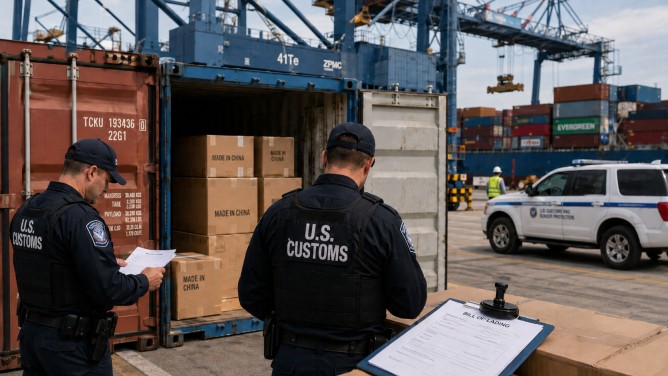
The United States has leveled accusations against 38 countries along with the European Union, alleging their involvement in a clandestine “shadow transshipment network.” This network is purportedly facilitating the entry of Chinese goods into the US market via third-party countries, circumventing high US tariffs. A recent report, titled “The Great Transshipment Scam,” claims that this potentially unlawful practice could have a monetary impact of approximately $60 billion, leading to substantial losses in US tariff revenue.
The list of implicated countries and territories is extensive, including India, Canada, Israel, Japan, Mexico, South Korea, Taiwan, Brazil, Indonesia, and several others such as Malaysia, Thailand, and Turkey. It also names Argentina, Azerbaijan, Bangladesh, Cambodia, Chile, Colombia, Costa Rica, the Dominican Republic, Georgia, Jordan, Kazakhstan, Kenya, Laos, Morocco, Myanmar, Oman, Panama, Peru, the Philippines, Singapore, Sri Lanka, Switzerland, the UAE, and Uzbekistan. The report suggests these regions are part of a network that allegedly allowed $67 billion worth of goods headed for the US to be rerouted from China through major hubs like Mexico, India, and Vietnam by 2025. The estimated consequence of such activities is an estimated $28 billion loss in US tariff revenue.
A particular focus within the report is on India’s Pune-Gujarat-Chennai corridor, where it claims Chinese shipments of items such as electric pumps and compressors have been rerouted. This practice is reportedly benefiting local businesses in India while simultaneously increasing competition for US manufacturers, thereby impacting the American industrial sector.
In response to these allegations, the US is considering a series of robust measures. Proposed actions include implementing stricter inspection protocols, enhancing interdiction efforts, and possibly imposing additional tariffs. The US may also consider sanctions or even restricting market access for those countries deemed to be facilitating tariff evasion, as part of a broader strategy to counteract and mitigate the effects of this alleged transshipment network.