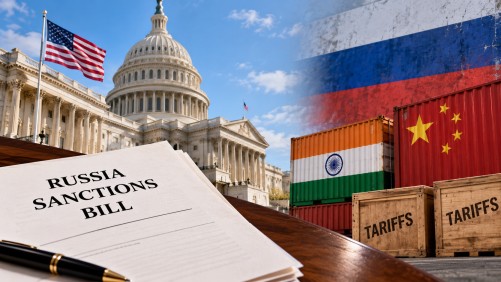
The U.S. House of Representatives has passed the Lindsey O. Graham Sanctioning Russia and Iran Act of 2026, authorizing President Donald Trump to impose tariffs of up to 100% on countries continuing to purchase Russian oil and natural gas. The bill, which targets Russia’s energy and defense sectors, cleared the House with a 262-159 vote and had previously gained Senate approval. It now awaits President Trump’s consideration.
This legislation empowers the U.S. president to apply significant tariffs on goods from nations that meet certain criteria related to Russian energy purchases or sanctions evasion. Notably, India and China might be impacted due to their ongoing purchases of Russian energy, although the measure does not automatically enforce the tariffs. The potential for these tariffs adds complexity to U.S.-India trade talks, as India’s Ministry of External Affairs emphasizes that its energy sourcing decisions prioritize national interests.
The act also intensifies existing sanctions on Iran while introducing new measures against Russian officials, financial institutions, and other entities involved in evading current sanctions. A key focus of the law is curbing Russia’s ability to circumvent international penalties through its network of oil tankers.
As the bill progresses to President Trump, its implications for international trade and diplomatic relations remain uncertain. The legislation underscores the U.S. government’s ongoing strategy to exert pressure on countries maintaining energy ties with Russia, amidst broader geopolitical tensions.