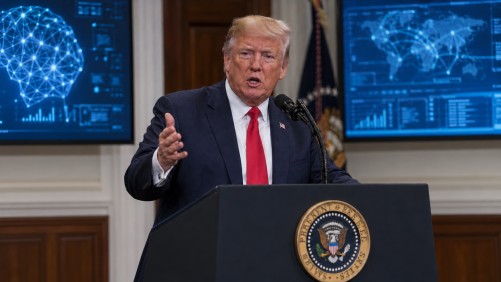
US President Donald Trump has unveiled plans to establish an “AI Force” and appoint an AI czar, aiming to address the burgeoning concerns surrounding advanced artificial intelligence technologies. This initiative is set to mirror the structure of the US Space Force, although details on its framework, duties, and implementation timeline remain scant.
The announcement comes at a time when global leaders and tech executives are grappling with the dual challenge of managing AI-related risks while fostering innovation. Trump has previously resisted calls for stringent AI regulations, warning that such measures could hinder US technological advancement and give China a competitive edge.
In a recent social media post, Trump characterized the fears surrounding AI as overstated, asserting that his administration would not curb the industry’s development. Instead, he suggested that existing legal frameworks could address any harmful actions linked to AI technologies.
Trump’s stance highlights AI as a pivotal economic force, with the potential to significantly influence the US economy. He emphasized the necessity of maintaining American dominance in AI over China, reflecting a broader international discourse on AI safety, especially with the rise of increasingly autonomous systems.
This federal initiative follows California Governor Gavin Newsom’s announcement of a panel to explore AI safety regulations, including strategies to deactivate AI systems that deviate from their intended purposes. Meanwhile, several Republican governors, including Florida’s Ron DeSantis and Utah’s Spencer Cox, have advocated for enhanced AI oversight and restrictions on sharing advanced technologies with China.
Trump’s proposal underscores the intensifying policy discussions in the US about balancing AI innovation with economic competition and public safety concerns, amid a backdrop of escalating international dialogues on AI governance.