
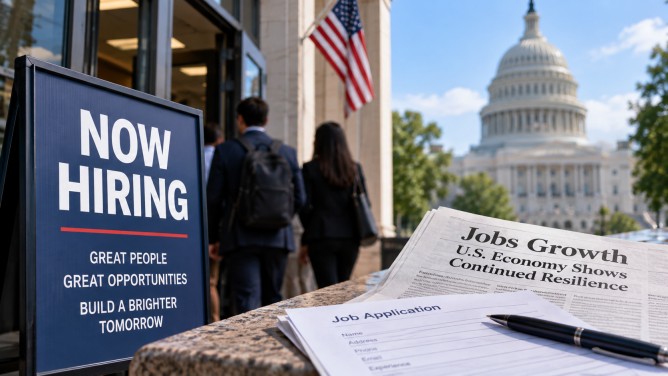
The US labor market saw a modest rebound in August, with 162,000 jobs added, marking a recovery after a sluggish summer. Despite this improvement, the unemployment rate held steady at 4.1%. The job growth figures have been notably erratic, with the economy previously adding 214,000 jobs in March before plummeting to a mere 21,000 in July. August’s figures surpassed economists’ forecasts, which had predicted at least 50,000 new jobs.
Revisions to earlier data showed a more positive picture for the summer months than initially reported. June’s job gains were adjusted upward from 20,000 to 31,000, and July’s figures were similarly revised from a loss of 23,000 jobs to a gain of 21,000. Nonetheless, signs of deceleration persist in the labor market, with private-sector employment seeing an increase of only 38,000 jobs in August, indicating a cautious approach to hiring among businesses.
Economists characterize the current labor environment as “slow hire, slow fire,” with companies neither aggressively expanding their workforces nor engaging in large-scale layoffs. Job openings and layoffs remained relatively unchanged in July, while the number of voluntary job leavers stayed flat, reflecting a decline in worker confidence regarding new job prospects.
Adding pressure to the labor market is persistent inflation, with annual US inflation rising from 2.4% in February to 3.4% in July. This increase has strained household finances through higher prices. Concurrently, rising bond yields have sparked concerns about borrowing costs, as higher Treasury yields can lead to more expensive mortgages, car loans, and student debt, potentially placing additional burdens on consumers.
The Federal Reserve is navigating a challenging path, balancing efforts to control inflation with the need to support employment. While raising interest rates could help bring inflation closer to the 2% target, further tightening might weaken the already slowing labor market. Meanwhile, President Donald Trump continues to advocate for lower interest rates, suggesting that cheaper borrowing could bolster the US economy.