
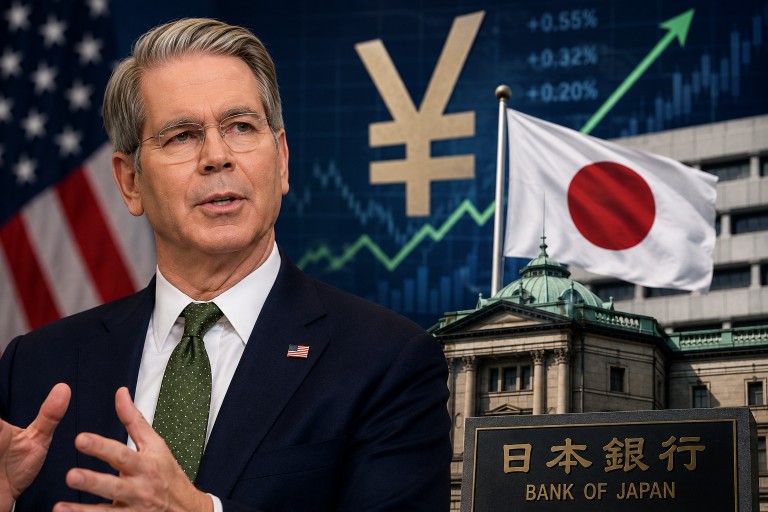
U.S. Treasury Secretary Scott Bessent has reaffirmed his backing for Japan’s initiatives to bolster the yen, a stance that aligns with market expectations of a potential interest rate hike by the Bank of Japan (BOJ) during its policy meeting on September 17-18. Bessent’s remarks came in a meeting with BOJ Governor Kazuo Ueda on the sidelines of the G20 finance ministers and central bank governors’ summit in Asheville, North Carolina. He highlighted the role yen depreciation plays in driving inflationary pressures and emphasized the need for sound monetary policy and transparent communication to stabilize inflation expectations and curb excessive currency fluctuations.
The anticipation of a BOJ rate hike has been growing in the markets, following the central bank’s previous rate increase in June. A decision to raise rates in September could signal a shift towards more aggressive monetary tightening by the BOJ. This move comes as Japan grapples with rising interest rates, which have already pushed the benchmark 10-year government bond yield above 3% for the first time since 1996. This shift reflects the market’s expectation of stricter monetary policy and rising concerns over Japan’s fiscal health.
The increase in bond yields is also impacting Japan’s government debt, with the Finance Ministry projecting a substantial rise in interest payments if borrowing costs remain high. Meanwhile, Japanese households are experiencing a rise in mortgage costs, particularly for fixed-rate loans, as a result of higher interest rates. However, there are some advantages; savers and financial institutions are benefiting from improved returns on deposits and long-term investments.
The Bank of Japan finds itself in a challenging position, needing to balance the support for the yen and the control of inflation, while avoiding undue financial pressure on households, businesses, and the government’s fiscal responsibilities. The situation requires careful navigation to ensure monetary policy adjustments do not overly strain the economy while addressing inflationary concerns and currency stability.