
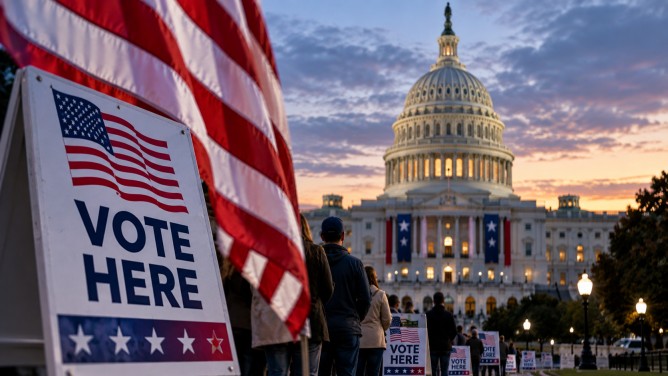
As the 2026 U.S. midterm elections approach, the political landscape is heating up with Republicans striving to defend their control of both the House and Senate. Meanwhile, Democrats are eyeing an opportunity to leverage President Donald Trump’s low approval ratings and the ongoing issue of inflation to gain ground. With the elections scheduled for November 3, campaigning is set to ramp up significantly after Labor Day, leaving just two months for candidates to make their case to voters. Recent polls indicate that Democratic contenders are competitive in several pivotal races, prompting election analysts to adjust their forecasts in favor of the Democrats in some instances.
The midterm elections historically serve as a referendum on the sitting president’s administration, often resulting in the loss of congressional seats for the president’s party. This trend poses a formidable challenge for Republicans as they aim to retain their majorities in Congress amidst a politically charged environment. Democrats are banking on economic issues, particularly inflation, and widespread opposition to Trump’s policies to galvanize voters. In contrast, Trump and the Republican leadership remain optimistic about overcoming these hurdles, buoyed by substantial financial resources and favorable redistricting in Republican-dominated states.
A significant financial edge for Republicans comes from Trump-aligned political organizations that possess ample funding to bolster their candidates. Additionally, the strategic redrawing of congressional districts in certain Republican-led states could provide a buffer against potential losses. This financial and structural advantage might prove crucial as both parties brace for a tightly contested election that could shape the final two years of Trump’s current administration.
Reflecting on the 2022 midterms offers insights into the unpredictable nature of political momentum. Although Republicans were anticipated to make significant gains due to high inflation and dissatisfaction with the Democratic administration, Democrats exceeded expectations. The Supreme Court’s decision to overturn the constitutional right to abortion notably energized Democratic voters, thereby curbing Republican advances. These past dynamics underscore the potential for unexpected shifts in voter sentiment as the current midterm elections draw nearer.
With Trump actively participating in the midterm campaign, both parties are preparing for an election that promises to be closely fought. The outcome will not only influence the composition of Congress but also the trajectory of Trump’s presidency in its concluding years. As the election date nears, the stakes are high, and the political strategies employed by both Republicans and Democrats will be critical in determining the balance of power in Washington, D.C.