
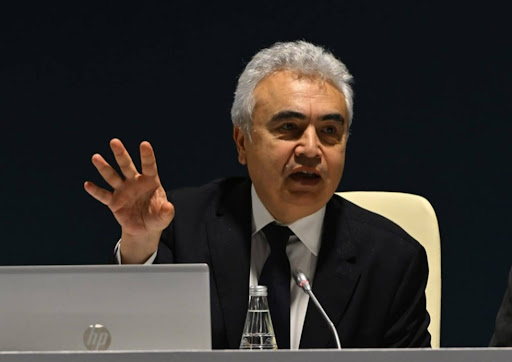
Fatih Birol, the head of the International Energy Agency, has praised Australia’s engagement on the global energy crisis while calling on Asia-Pacific nations more broadly to step up their collective response to what he described as a historically unprecedented supply emergency. The IEA chief, speaking in Canberra after meeting Prime Minister Anthony Albanese, said the region was among the most severely affected by the closure of the Strait of Hormuz. He urged countries in the region to avoid fuel hoarding and to coordinate their response internationally.
Birol described the current crisis as the combined equivalent of the two oil shocks of the 1970s and the gas crisis caused by Russia’s invasion of Ukraine — three major energy disruptions compressed into one. The conflict, which began with US and Israeli strikes on Iran on February 28, has removed 11 million barrels of oil per day from global oil markets and 140 billion cubic metres from gas supply. At least 40 Gulf energy assets have been severely damaged, ruling out a quick return to pre-crisis supply levels.
The IEA released 400 million barrels from strategic petroleum reserves on March 11, the largest single emergency action in the agency’s history. Birol said the release represented just 20 percent of available stocks and that further deployments were under consideration. He also pushed governments to adopt demand-reduction policies including working from home, lower speed limits, and fewer commercial flights.
The Strait of Hormuz, through which approximately 20 percent of global oil flows, remains closed to commercial traffic. Japan has indicated it could participate in minesweeping operations if a ceasefire is achieved, while Australia, Japan, and South Korea were criticized by US President Trump for not doing more to help secure the strait. Birol welcomed Japan’s signaling and said any contribution from regional nations to restoring safe passage through Hormuz would be valuable.
Iran threatened retaliatory strikes on US and allied energy and water infrastructure following Trump’s 48-hour ultimatum. Birol warned that no economy in the region — or the world — would emerge unscathed from a prolonged crisis. His message to Asia-Pacific governments was that collective action now would be far less costly than the consequences of delayed or fragmented responses.