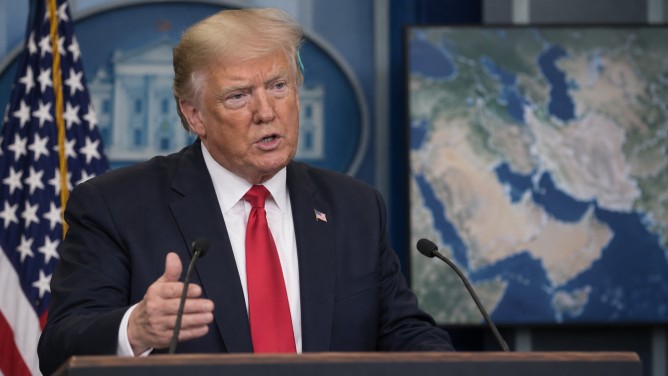
President Donald Trump has indicated that the ongoing conflict with Iran might come to a close soon, as the United States has reportedly hindered Iran’s efforts to acquire a nuclear weapon. During a recent event at the White House, Trump expressed optimism that a resolution could lead to a decrease in fuel prices, once the hostilities end.
While maintaining that the United States is open to direct negotiations with Iran, Trump rejected a recent proposal from Tehran, citing uncertainties regarding the country’s leadership. He further announced that the U.S. would abstain from initiating any new military strikes against Iran before the midterm elections on November 3. However, he did not completely rule out the possibility of renewed military actions after the elections, depending on the outcome of ongoing diplomatic discussions.
The conflict has persisted for several months despite previous attempts to reach a ceasefire and establish a lasting peace agreement. Key sticking points in the negotiations have included disagreements over military activities and control of the Strait of Hormuz, a crucial maritime corridor that previously facilitated the passage of about 20% of the world’s oil supply. Any interruption to the navigation through this waterway significantly impacts global energy markets and fuel costs.
Negotiation efforts faced a setback when Trump declined an Iranian offer to reopen the Strait of Hormuz within a week, subject to specific conditions. The success of diplomatic efforts to secure a lasting agreement between the two nations remains uncertain.