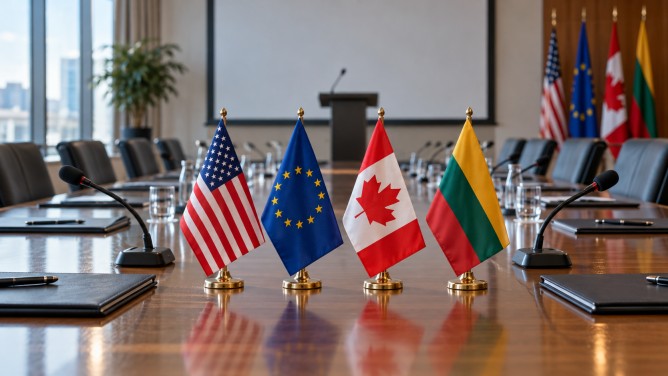
The United States recently expressed concerns about a European conference on disinformation, leading to the withdrawal of official support from Lithuania, Canada, and the European Union. The #Disinfo2026 conference, held in Vilnius, Lithuania, on October 7 and 8, aims to bring together experts to discuss disinformation and strategies to counteract information manipulation.
Days before the event, the logos of Lithuania’s Foreign Ministry, Canada’s Global Affairs department, and the European External Action Service were removed from the list of supporters. This decision followed interactions between U.S. officials and these governments regarding their involvement in the conference. U.S. internal documents reportedly showed approval of Lithuania’s decision to scale back its participation.
The controversy largely centered on a panel discussion examining whether the United States could be considered a source of foreign information manipulation and interference. This topic raised questions about the balance between fighting disinformation and allowing open debate on government actions.
Lithuania stated that parts of the conference did not align with the government’s official stance. Canada revised its participation due to changes in the framing of several panel discussions, although Canadian officials continued to attend. The EU also withdrew its official backing, citing misalignment with its official positions, though it continues to fund the event.
Despite the withdrawals, France chose to maintain its support for the conference, emphasizing the importance of engaging with civil society in shaping European policies on disinformation. These developments underscore the growing differences among Western nations on defining foreign information threats and responding to criticism in international forums.