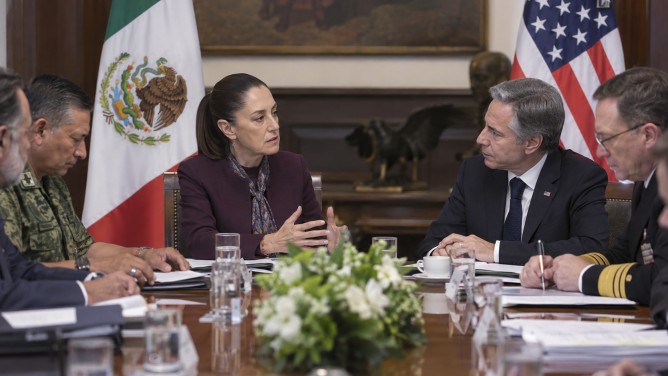
Mexico is making strides in rebuilding security cooperation with the United States under the leadership of President Claudia Sheinbaum. This marks a significant turnaround from the strained relations experienced during former President Andrés Manuel López Obrador’s tenure. The revitalized partnership is largely facilitated by Omar García Harfuch, Security Cabinet coordinator, who has engaged in numerous discussions with high-ranking US officials to enhance intelligence sharing and tackle organized crime more effectively. Mexican authorities highlight that quicker information exchanges have enabled them to act more promptly against criminal enterprises.
Since Sheinbaum took office, Mexico has seen substantial progress in its fight against crime, including the arrest of tens of thousands of suspects, major drug and weapons seizures, and the dismantling of numerous clandestine drug laboratories. The country has also expedited the extradition of prominent criminal suspects to the US, while officials report a notable reduction in fentanyl trafficking. This renewed cooperation illustrates a departure from the policies of the López Obrador administration, which had shut down a US intelligence unit in Mexico and imposed stricter constraints on foreign security agents.
Relations between the two nations had soured further following the 2020 detention of former Defense Minister Salvador Cienfuegos and disagreements over investigations into organized crime. Tensions heightened in 2024 when reports surfaced linking drug-trafficking funds to López Obrador’s 2006 presidential campaign, though these allegations did not lead to formal charges. These incidents contributed to a growing mistrust between Mexico and the US during that period.
Despite the renewed collaboration, President Sheinbaum continues to emphasize the importance of Mexico’s sovereignty and insists on mutual respect in dealings with the US. Her administration has voiced concerns over perceived attempts by US officials to sway or create divisions within Mexico’s security leadership. As both countries aim for closer coordination in combating organized crime, Mexico remains steadfast in ensuring that intelligence cooperation aligns with its national interests and sovereignty.
The cautious yet improving relationship between Mexico and the US represents a strategic effort by both nations to balance effective collaboration against organized crime while respecting each country’s autonomy and priorities. As these efforts progress, the focus remains on maintaining a partnership that benefits both parties in their shared goal of enhancing regional security.