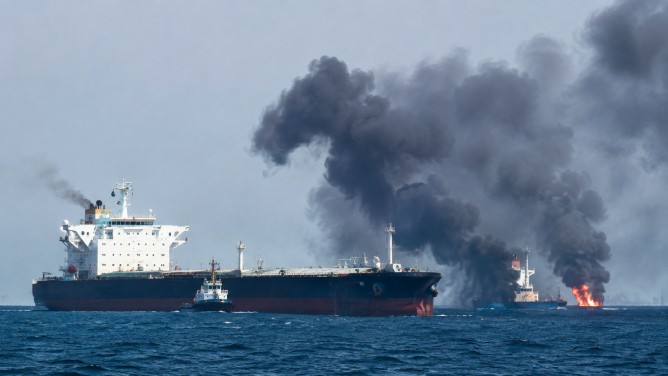
The Islamic Revolutionary Guard Corps (IRGC) of Iran announced it had intercepted two oil tankers attempting to pass through the Strait of Hormuz while being escorted by U.S. military forces, accusing them of straying from the permitted shipping route. Following this incident, four additional tankers opted to return rather than continue their journey. The Strait of Hormuz is a critical channel for global energy shipments, and tensions there have intensified amid renewed hostilities between Iran and the United States, significantly disrupting maritime activities and pushing global crude oil prices past $90 per barrel.
Heightened military tensions are evident across the region. Kuwait reported successfully intercepting Iranian drones aimed at significant military and strategic sites, with no reported casualties. Meanwhile, Israel launched a substantial offensive near Lebanon’s Beaufort Castle, asserting it was targeting Hezbollah infrastructure. Lebanese officials, however, have condemned the action, accusing Israel of violating a ceasefire agreement.
In response to these developments, U.S. President Donald Trump gathered his cabinet at Camp David to evaluate the ongoing conflict’s ramifications and its economic consequences. The crisis has already led to a surge in fuel and consumer goods prices, escalating pressure on the U.S. administration. Concurrently, opinion polls reveal waning public backing for the conflict as it stretches on.
The persistent instability in the region has paradoxically benefited major energy corporations, as the rise in oil prices continues to ripple through global markets, boosting their profits.