
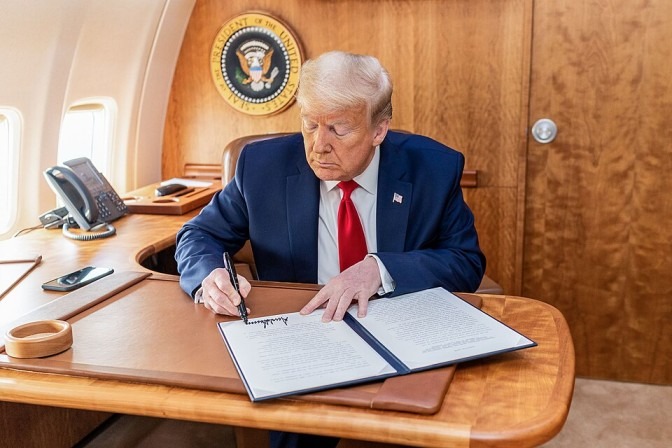
In a move aimed at bolstering national security and cybersecurity readiness, President Donald Trump has enacted a new executive order that establishes a voluntary framework for technology companies to share their advanced artificial intelligence (AI) models with the U.S. government prior to public release. This initiative allows federal agencies to assess the potential impact and risks of these powerful AI systems before they are deployed, with companies having the option to submit their models for review up to 30 days before launch.
The framework introduced by the executive order does not mandate government approval or licensing for AI products, maintaining a voluntary approach to participation. This reflects the administration’s goal of balancing the need for innovation in the AI sector with the importance of addressing security concerns. Federal officials will collaborate with AI developers to evaluate potential risks and decide if a model would benefit from government scrutiny. Key agencies involved in this process include the National Security Agency, the Department of Defense, and the Treasury Department.
Responding to increasing worries about the misuse of advanced AI systems, particularly in areas like cybersecurity, national defense, and critical infrastructure protection, the administration has crafted this framework to mitigate emerging security threats. Although some policymakers have pushed for more stringent oversight, the final order opts for a strategy that avoids regulatory constraints that might hinder technological progress. The administration stresses the importance of maintaining the United States’ leadership in AI while also addressing potential security risks associated with new technologies.
Beyond the AI model review framework, the executive order also directs federal agencies to enhance their cybersecurity capabilities. This includes expanding the use of AI-driven defensive tools and recruiting more professionals specializing in AI and cybersecurity. Additionally, the order emphasizes the need for improved protection of government information systems and key infrastructure sectors. This initiative marks a shift toward increased federal involvement in ensuring AI safety and security, while still promoting an innovation-centric approach to regulating this rapidly advancing technology sector.