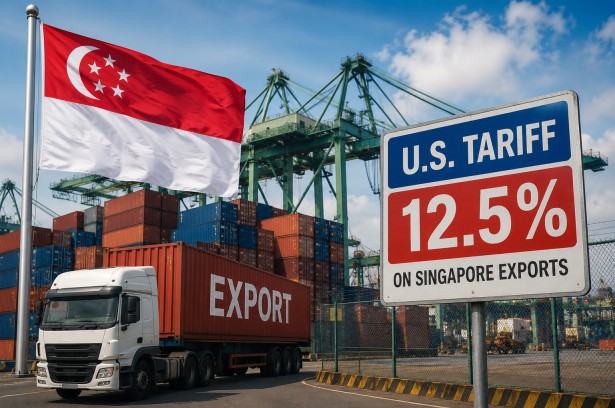
The United States has introduced a new 12.5% tariff on about one-third of Singapore’s domestic exports, citing concerns over the enforcement of laws against forced labor. This action is part of a broader trade policy affecting numerous global economies. In response, Singapore has firmly denied these allegations, emphasizing its strict legal framework against forced labor practices. The Ministry of Trade and Industry has stated its intention to continue discussions with U.S. trade officials to gain clarity on the implementation of the new tariff.
Despite the tariff, several of Singapore’s key exports, such as pharmaceuticals, semiconductors, certain electronics, aerospace products, and energy products, as well as goods already subjected to specific U.S. tariffs, will not be affected by this new measure. This decision to exempt these sectors highlights the complexity and selectivity of the new trade restrictions.
Business groups have expressed concerns that the imposition of the tariff could heighten uncertainty for manufacturers and exporters in Singapore. The ongoing U.S. investigation into trade practices, which could lead to more trade measures, adds to this apprehension. Industry leaders are advising companies to consider diversifying their export markets and strengthening the resilience of their supply chains to mitigate potential risks.
Singapore’s government remains committed to engaging with the United States to resolve these trade tensions. The dialogue aims to ensure that both countries can maintain a stable and mutually beneficial trade relationship while addressing the allegations in a manner that reflects Singapore’s commitment to international labor standards.