
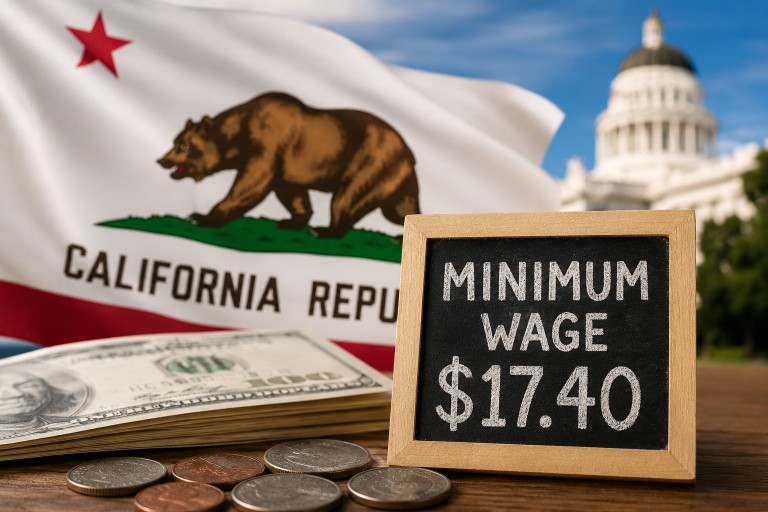
California is set to raise its statewide minimum wage to $17.40 per hour starting January 1, marking the highest such rate across the United States. Governor Gavin Newsom emphasized that this increase is designed to assist workers in managing the state’s elevated living costs. The move underscores California’s commitment to supporting its workforce amid ongoing economic challenges.
During the announcement of the wage hike, Governor Newsom took the opportunity to criticize the Trump administration and Republican lawmakers for their resistance to elevating the federal minimum wage, which has stagnated at $7.25 per hour since 2009. In contrast, Newsom highlighted California’s proactive strategy of boosting wages to better sustain working families within the state.
Nevertheless, the increased minimum wage does not fully resolve issues of affordability in California. A report referencing an estimate by the Massachusetts Institute of Technology illustrates this ongoing challenge, indicating that two working adults with two children in the state would each need to earn approximately $36.38 per hour to meet basic living expenses. This stark gap points to the broader economic pressures facing families despite the wage increase.
The decision to raise the minimum wage reflects broader economic policy debates, focusing on how best to support low and middle-income workers. California’s approach stands as a counterpoint to federal wage policies, emphasizing state-level initiatives to address living costs. As the new wage rate takes effect, it will be closely watched as a potential model for other states grappling with similar economic issues.