
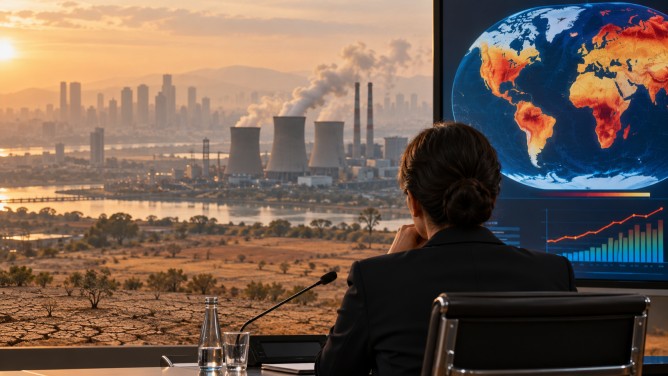
The United Nations Environment Programme (UNEP) has issued a stark warning that global greenhouse gas emissions must be reduced by 18% by 2030 and 45% by 2045 to mitigate the severe impacts of climate change. The report highlights the critical need to limit global temperature increases to 1.7°C above pre-industrial levels, noting that the world is currently off track to meet the 1.5°C target set by the Paris Climate Agreement.
Despite the recent stability in global emissions, which remained similar in 2025 compared to the previous year, experts caution against interpreting this as a sign of long-term decline. The continued reliance on fossil fuels, paired with the uncertainty of climate policies, poses significant challenges to achieving these reduction targets. The report underscores that existing national climate commitments are inadequate, projecting a potential temperature rise of approximately 2.6°C if current pledges are fulfilled, and 2.8°C under existing policies.
To avert these projected increases, climate experts are calling on major fossil fuel-producing nations to expedite the shift towards renewable energy sources and to enhance their emissions-reduction strategies. While the growth of renewable technologies like solar and wind power is promising, political action has not matched the pace recommended by scientific authorities.
Reducing methane emissions is also a crucial strategy for curbing global warming. Methane has a much greater short-term warming effect than carbon dioxide, making its reduction a priority in closing the gap between climate commitments and actual policy implementation.
The UNEP report also emphasizes the importance of the upcoming global climate assessments in reviewing national progress and fostering stronger commitments from governments worldwide. Scientists warn that delaying action could lead to irreversible changes in the climate system, urging immediate policy reform to prevent catastrophic outcomes.