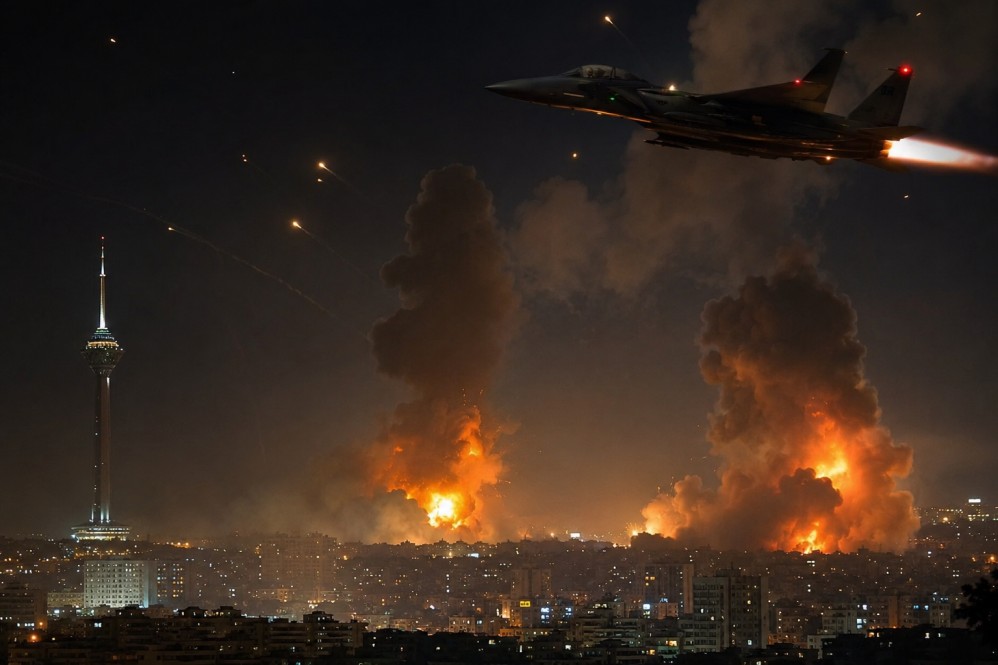
The United States has intensified its military actions against Iran with a third consecutive night of airstrikes, as President Donald Trump outlines plans for a maritime blockade and a 20% tariff on cargo traversing the Strait of Hormuz. These measures are part of a broader strategy to reinforce security and restrict Iran’s influence in this vital shipping corridor. The US Central Command has stated that these strikes are intended to diminish Iran’s military capabilities and avert any threats to commercial vessels and civilians navigating the waterway.
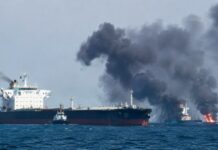
In response to recent incidents involving Iranian cruise missiles hitting two UAE oil tankers in Omani waters, which resulted in the death of an Indian crew member and injuries to others, the US administration is taking a firm stance. President Trump has asserted that military operations will persist, emphasizing that the US will continue to oversee security in the strait. These developments have contributed to a surge in Brent crude oil prices, which have risen nearly 8%, heightening concerns about the global energy market.
Iran has vehemently opposed the proposed blockade, accusing the US of jeopardizing international energy security and warning of a robust reaction to any attempt to limit its maritime access. Additionally, international maritime authorities have pointed out the lack of legal grounds for imposing mandatory transit fees in international waters under current international law.
The escalating military activities have sparked fears of a broader regional conflict, with ongoing attacks causing disruptions in shipping, increasing oil prices, and injecting uncertainty into the global economy. The situation in the Middle East remains tense, as both sides navigate the potential ramifications of these heightened tensions.