
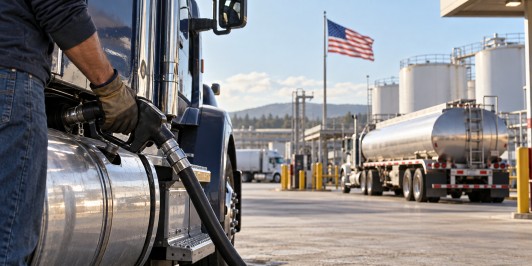
U.S. diesel prices have reached unprecedented levels as the Trump administration considers implementing a temporary 90-day ban on diesel exports. This proposed measure aims to increase domestic fuel supplies and potentially lower prices. By keeping more diesel within the United States, the administration hopes to alleviate some of the pricing pressures. However, energy analysts warn that the move might have limited effectiveness and could pose additional challenges to the U.S. fuel industry.
A key issue in addressing diesel supply is the uneven distribution across the country. Much of the U.S. refining capacity is located along the Gulf Coast, while shortages are being reported in the Northeast and West Coast regions. Existing pipelines are already operating near capacity, making it difficult to move additional fuel from the Gulf Coast to areas experiencing shortages. Although transporting diesel by water is an alternative, it would result in longer transit times and higher costs, meaning increased domestic supplies may not significantly lower prices in shortage regions.
Global market conditions also play a significant role in U.S. diesel prices, which are influenced by international fuel prices and supply conditions. U.S. refiners often have financial incentives to export fuel when international prices are higher. Additionally, disruptions to global energy supplies, including those linked to the Iran war and attacks on Russian refining capacity, have tightened global supplies and added pressure to fuel markets.
The U.S. has a history of using export restrictions during times of market stress. Following the 1973-74 Arab oil embargo, crude oil export restrictions were introduced to bolster domestic energy security. These restrictions were gradually eased and eventually repealed in 2015 as U.S. oil production increased. While a temporary diesel export ban could boost domestic availability in the short term, its impact would depend on factors such as refinery production, transportation capacity, regional demand, and global fuel prices.
Ultimately, while the proposed export ban might provide some additional diesel to the U.S. market, it is unlikely to resolve the broader supply and pricing pressures currently affecting diesel markets. The complex interplay of domestic and international factors means that the measure alone may not be sufficient to stabilize prices.