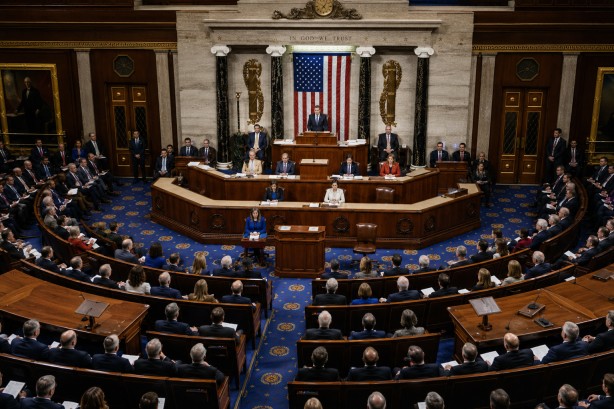
The U.S. House of Representatives has approved the National Defense Authorization Act (NDAA), a substantial $1.15 trillion defense spending bill, with a narrow 216-212 vote. This decision, primarily divided along party lines, propels the bill to the Senate for further deliberation. Central to the legislation are provisions for pay increases of 5% to 7% for military personnel and strategic investments to bolster the United States’ military strength.
While Republican leaders champion the bill as essential for modernizing the armed forces and boosting national defense, Democratic opposition arises from concerns over the high defense spending, especially in light of proposed cuts to other domestic programs. Tensions have intensified due to President Donald Trump’s recent decision to execute military strikes against Iran without congressional consent, fueling debate about the extent of U.S. military involvement in the Middle East.
The bill also contains contentious voting-related measures supported by Trump, including tighter voter ID laws and restrictions on mail-in voting. Democrats argue these provisions are misplaced within defense legislation, contending they should be addressed separately.
In legislative discussions, a proposal to cease U.S. military aid to Ukraine was defeated, while other amendments, such as those concerning transgender military policies and defense healthcare, sparked vigorous debates. Amid these discussions, House Republicans separately endorsed a budget framework allocating $73 billion for military activities involving Iran, which remains below the Pentagon’s larger defense funding request.