
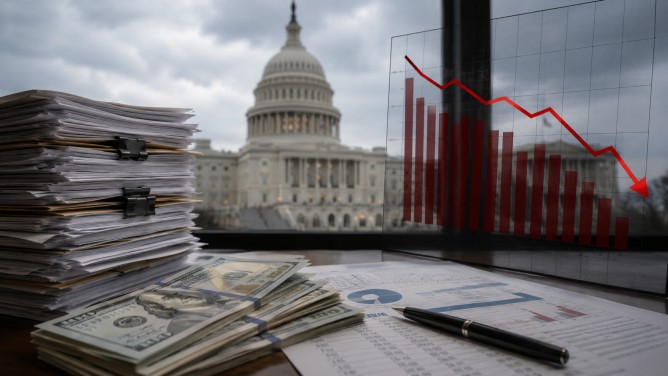
The United States is on track to face a significant federal budget deficit, projected to reach approximately $2.1 trillion in the fiscal year 2026. This anticipated increase stems from government spending outpacing tax revenue growth, as detailed in recent forecasts. In the first ten months of the current fiscal year alone, the federal government reported a deficit nearing $1.8 trillion, marking an increase of about $169 billion compared to the same period last year. This surge is attributed to a $308 billion rise in federal spending against a more modest $139 billion increase in tax receipts.
A notable factor contributing to the expanding deficit is the escalating interest costs associated with the national debt. In the first ten months of the fiscal year, interest payments surged by $117 billion, or 14%, compared to the previous year. Concurrently, spending on major government programs witnessed substantial hikes, with Social Security spending climbing by $70 billion, Medicare by $66 billion, and Medicaid by $45 billion.
Despite an uptick in individual and payroll tax collections, a significant decline in corporate tax revenue has been observed. Additionally, tariff revenue has been impacted by refunds, further constraining the government’s overall income. These factors have combined to exacerbate concerns about the widening deficit and its implications for the sustainability of U.S. government borrowing and the burgeoning national debt.
The Congressional Budget Office (CBO) anticipates that government spending will remain closely aligned with previous projections. However, revenue forecasts have been adjusted downward by approximately $200 billion from earlier estimates. This revision underscores the growing financial challenges facing the nation as it grapples with balancing expenditure and income amid rising fiscal pressures.