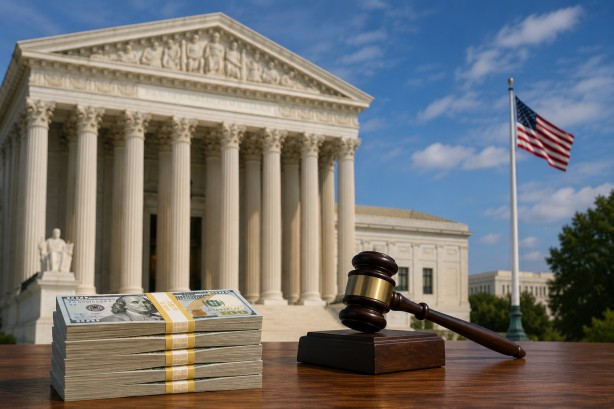
The U.S. government has reimbursed businesses with $81 billion in tariffs following a Supreme Court ruling that found a large portion of former President Donald Trump’s tariff policies were illegally imposed. This significant refund, issued during the current fiscal year, starkly contrasts with the $5 billion returned over the same period last year. The Supreme Court’s decision mandated the government to return import duties to companies affected by the invalidated tariffs, with most refunds processed in May and June, according to Treasury budget data.
This substantial repayment has contributed to the growing federal budget deficit, which has ballooned to $1.367 trillion in the first nine months of the fiscal year. The deficit’s expansion is also attributed to increasing interest payments on national debt and higher military expenditures. These financial pressures reflect broader fiscal challenges facing the government amidst ongoing economic adjustments.
Despite the judicial setback, the Trump administration is planning to launch a new series of tariffs. These tariffs aim to address issues related to trade practices, industrial overcapacity, and the enforcement of anti-forced labor laws. Proposed rates for these upcoming tariffs are anticipated to fall between 10% and 12.5%, with potential additional levies on several key trading partners under consideration.
The refunding of tariffs and the simultaneous planning of new ones underscore the complex landscape of international trade relations that the U.S. navigates. As the government balances legal rulings with strategic economic maneuvers, businesses and trading partners alike remain attentive to the implications of these evolving policies.